
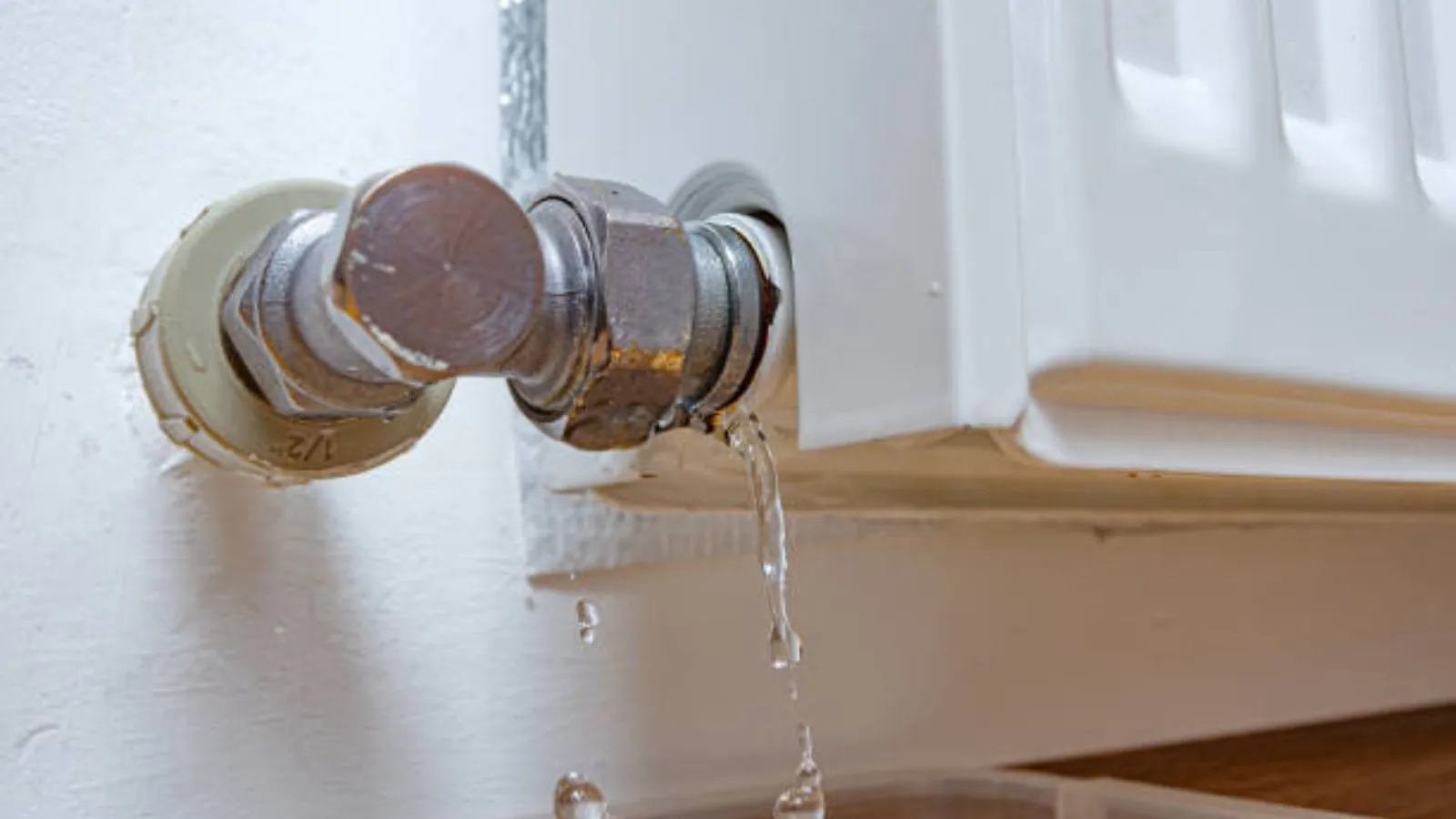
Emergency water heater leak cleanup in Chelsea begins at the heater itself. Turn off the cold water supply valve on top of the tank, switch off the electric breaker or set a gas heater to pilot, and then call (659) 250-1979. Dispatch answers 24/7. A failed tank puts its whole volume on the floor, and the closet or garage around it is rarely built to handle that.
This page covers the heater and the water it released. A line that burst under pressure elsewhere in the house is burst pipe water damage, and a drip from a dishwasher or washer is an appliance leak.
When a water heater leak is an emergency
A slow drip from a relief valve is a plumber call. A pooling puddle, a rusted seam or a tank that is hot and hissing is an emergency. Residential tanks hold roughly 40 to 50 gallons, and a split tank dumps that volume quickly, then keeps refilling from the supply line until the valve is closed.
Safety: Power, gas and hot water
Switch off the heater at its breaker, but only from a dry panel. For a gas unit, set the control to pilot or off. Do not touch a wet electric heater, and leave the area if you smell gas and call the gas utility or 911. The water can be scalding, so stay clear of any spray.
Where heater water ends up
Heaters sit in garages, utility closets, attics and crawl spaces, and each location sends the water somewhere different. A garage slab will carry it to a floor drain or out the door. A closet inside the house sends it under drywall and into carpet. An attic unit sends it down through the ceiling.
| Heater location | Where the water goes | Likely follow-up |
|---|---|---|
| Garage | Slab, stored boxes, wall base | Extraction and drying of lower drywall |
| Interior closet | Carpet, pad, hallway flooring | Carpet and pad removal |
| Attic | Insulation, then the ceiling below | Ceiling repair and insulation replacement |
| Crawl space | Insulation, joists, vapor barrier | Crawl space drying |
How the cleanup works
- Make it safe. Supply, power and gas are shut off before anyone works near the unit.
- Extract. Water extraction removes standing water from slab, carpet and subfloor.
- Inspect. Moisture meters and thermal imaging check drywall, baseboard and flooring beyond the visible wet area.
- Dry. Air movers and dehumidifiers dry the structure until readings match dry reference materials.
- Hand off. A plumber replaces the heater, and finishes are rebuilt after drying.
Tank water is usually clean when it leaves the heater, which helps, but sediment, rust and standing time can change that. Water that sits in carpet pad for a day or more starts to degrade.
Tank down and water spreading? Shut off the supply and call.
☎ Call (659) 250-1979Why Shelby County tanks fail
Most tank failures come from age and sediment. Tanks corrode from the inside, and the anode rod that slows corrosion wears out over time. Many tanks are installed in garages and attics where they are out of sight, so the first sign is often a wet floor or a stained ceiling rather than a drip.
A drain pan with a line to a floor drain or outside catches small leaks. It does nothing for a rupture. If your heater has no pan, mention that when you call so crews know where water may have gone.
Tank water leaves the heater clean, so ANSI/IICRC S500 files it under Category 1, but it degrades over time in carpet pad.
What shapes the cost of heater water cleanup
- Location. A garage slab dries faster and costs less than a closet with carpet and drywall.
- Volume and time. A leak found within an hour costs less than one that ran overnight.
- Materials. Carpet pad, baseboard and drywall near the heater are the common replacements.
- Access. Attics and crawl spaces slow setup.
- Replacement. The new heater is a plumbing cost, separate from restoration.
Sudden tank rupture is often a covered cause of loss, while a slow leak over weeks is often not. The Alabama Department of Insurance advises photographing the damage and keeping receipts for temporary repairs. For a realistic number, call (659) 250-1979.
Frequently asked questions
Yes, any hour. Shut off the supply valve on the tank and the power or gas to the heater, then call (659) 250-1979. Tell dispatch where the heater sits so crews know where the water went.
Close the cold water valve on the supply pipe above the tank, turn off the breaker or set a gas heater to pilot and open a hot tap elsewhere to relieve pressure.
It begins as clean supply water, but sediment, rust and time change that. Treat water that sat for more than a day as no longer clean.
A plumber. Restoration crews remove water and dry the structure. The two jobs can run side by side.
Often when the tank failed suddenly, but not always for long-term leaks. Read your policy and ask your insurer. Document everything.
Not until a plumber checks it. A leaking tank needs replacement, and a wet electric unit is a shock hazard.
Water still on the move? Dispatch is open around the clock.
☎ Call (659) 250-1979