
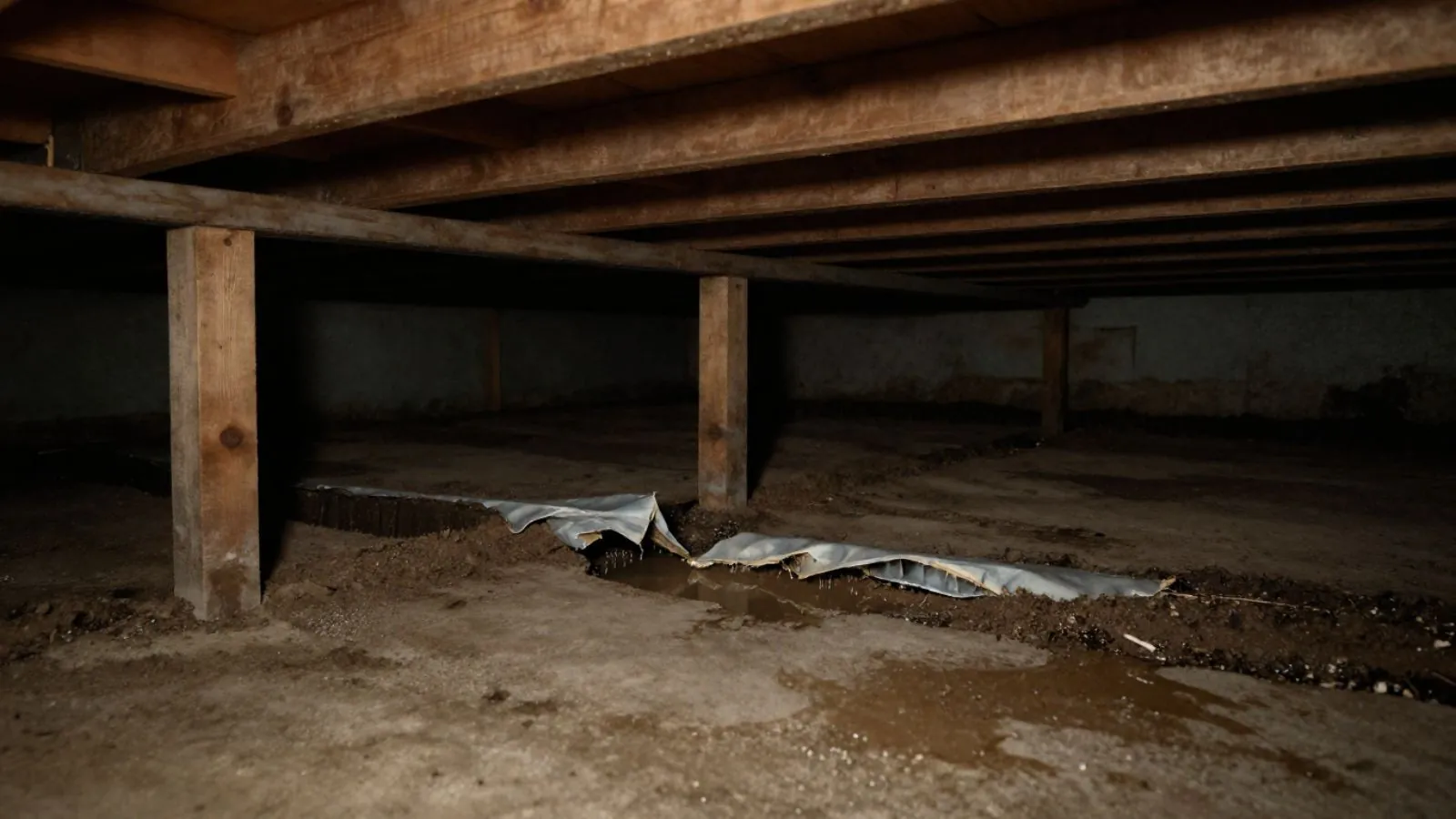
Crawl space water damage in Chelsea often goes unseen because the space is cramped, dark and rarely visited. Standing water, damp insulation and a musty smell coming up through the floor are the usual signs. Call (659) 250-1979 to talk through what you found, and avoid entering a crawl space with standing water and live wiring.
This page is about the space under pier-and-beam and raised homes. If water is entering a finished lower level, see basement water damage. For leaks from a slab, slab leak damage covers that foundation type.
What goes wrong under a Chelsea house
Crawl spaces collect water three ways. Surface runoff flows toward foundation vents or low spots. Plumbing leaks drip onto the vapor barrier. Humid air enters through open vents and condenses on cool ducts and pipes. Sloped lots near Double Oak Mountain tend to send runoff toward the low side of a house.
| What you find | Likely source | Next step |
|---|---|---|
| Standing water | Runoff or a plumbing leak | Find the source, pump and dry |
| Wet or sagging insulation | Leaks above or humidity below | Remove and replace |
| Mold on joists or subfloor | Long-term moisture | See mold remediation |
| Condensation on ducts | Humid air meeting cool surfaces | Seal, insulate and ventilate |
How crawl space water is handled
- Find the source. Check gutters, grading, vents, and supply and drain lines.
- Remove standing water. A pump clears the space, and wet vac work finishes the edges.
- Remove wet insulation. Saturated batts hold water against the subfloor and are discarded.
- Dry. Air movers and dehumidifiers reduce moisture in the wood and the air.
- Protect. A vapor barrier and better drainage reduce the chance of a repeat.
Moisture in wood framing is measured with a meter. Wet framing that is dried quickly generally stays in service, while wood with rot or soft spots needs replacing.
Why wet crawl spaces matter above the floor
Moisture below does not stay below. It wicks into floor joists, subfloor and hardwood, and it can raise indoor humidity. The EPA recommends keeping indoor humidity below 60 percent, and a wet crawl space can push a house past that. Cupped hardwood, spongy floors near exterior walls and a persistent musty smell are signs the moisture is rising.
The wood floors above are covered on the hardwood floor damage page.
Wet crawl space? Dry it before it reaches the floor above.
☎ Call (659) 250-1979What to check from outside
You can learn a lot without crawling under the house. Walk the perimeter after rain and look for ponding near the foundation, downspouts that discharge close to the wall and soil that slopes toward the house. Check that vents are clear and that no hose bibs or exterior faucets are dripping into the ground.
Inside, look for cool or damp floors in rooms above the crawl space, a musty smell when the heat or air conditioner runs and doors that stick in humid weather. Those are cues to ask for a moisture reading. Avoid entering a crawl space alone if you see standing water, exposed wiring or signs of animals.
ANSI/IICRC S500 also covers wet crawl spaces, where soil and standing water make Category 2 or 3 handling common.
Safety: Before you enter
Do not enter a crawl space that holds standing water near wiring. Snakes, insects and low clearance add risk, so wear gloves and a respirator if you must look.
What shapes the cost of crawl space work
- Water depth. Deeper standing water means longer pumping.
- Access. A tight crawl route slows every task.
- Insulation and barrier. Wet insulation and torn vapor barrier are removed and replaced.
- Wood condition. Wet but sound framing is dried, rotten framing is replaced.
- Source fix. Grading, gutters or plumbing repair are separate costs.
Insurance depends on the cause. Plumbing leaks may be covered, and groundwater generally is not, according to the Alabama Department of Insurance. Document everything and keep receipts. For a realistic number, call (659) 250-1979.
Frequently asked questions
It can be if wiring or ductwork is wet, and it can hide hazards. Stay out if you see exposed wiring and let a professional assess it.
Runoff toward the foundation, a clogged gutter or poor grading are common causes. A lot that slopes toward the house makes it worse.
A ground vapor barrier slows moisture rising from the soil and is a common part of crawl space moisture control.
Usually not. Saturated insulation holds water and is typically removed.
It can when wood stays damp. The EPA notes mold will not grow without moisture, so drying fast is the best prevention.
Plumbing leaks may be. Groundwater generally is not. Ask your insurer.
Water still on the move? Dispatch is open around the clock.
☎ Call (659) 250-1979