
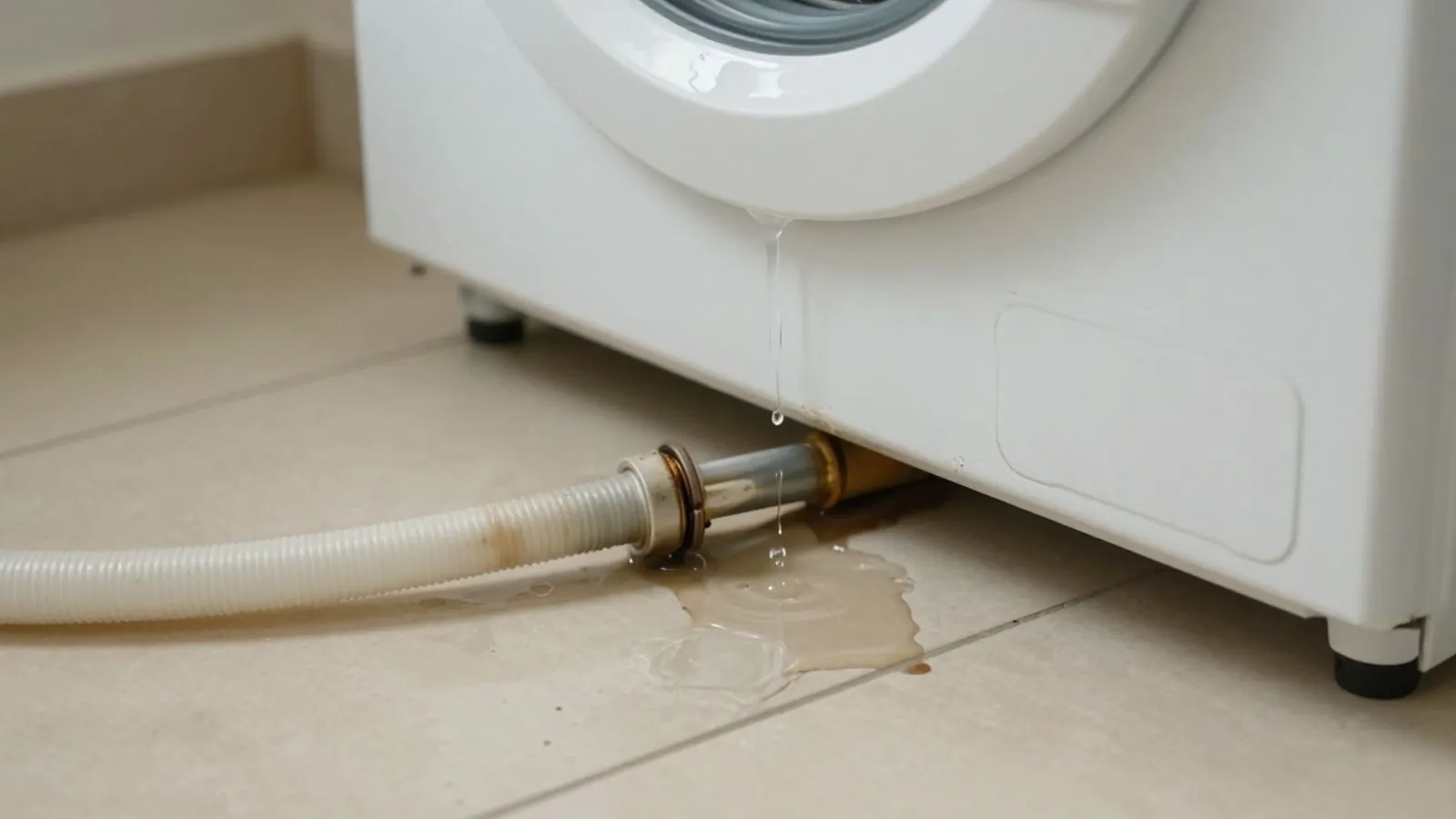
Emergency appliance leak water damage in Chelsea usually comes from a small part that fails in a big way. A washing machine hose lets go, a dishwasher door seal drips for weeks or a refrigerator ice-maker line splits behind the unit. Close the valve to the appliance, unplug it only if the outlet and floor are dry, and call (659) 250-1979. Dispatch answers 24/7.
This page owns water from appliances. A leak from the tank that heats your water belongs to water heater leak cleanup, and an HVAC drip is its own page at AC leak water damage. If the kitchen floor is the main damage, kitchen water damage covers cabinets and flooring.
When an appliance leak is an emergency
A damp spot under a dishwasher is worth a plumber. Water that reaches baseboards, runs under cabinets or comes through a ceiling is an emergency. Washing machines are the biggest risk, because a hose under pressure keeps flowing until someone closes the valve, and many homeowners are not home when it fails.
Safety: Water near the plug
Never reach behind an appliance if water is on the floor around the outlet. Turn off the breaker for that circuit from a dry panel, then pull the plug. If you cannot do that safely, call the utility or 911 before you call the restoration line.
| Appliance | Common failure | Where water goes |
|---|---|---|
| Washing machine | Supply hose burst, drain hose pulled loose | Laundry floor, wall base, level below |
| Dishwasher | Door seal, supply fitting, pump hose | Cabinet base, kitchen subfloor |
| Refrigerator | Ice maker line, drain pan overflow | Under flooring, behind toe-kicks |
| Water softener | Drain line, brine tank overflow | Utility floor, drywall base |
Slow leaks are the costly ones
The worst appliance damage often comes from leaks nobody saw. A fitting that weeps for months soaks the subfloor, swells the cabinet base and grows mold behind the toe-kick before any stain shows. Warped flooring, a musty smell near the appliance or a soft spot underfoot are the usual signs.
For a slow leak, the first job is finding how far it went. Moisture meters and thermal imaging map wet subfloor and wall bases without tearing everything open. That map decides whether the repair is a dry-out or a replacement, and it feeds into mold remediation if growth has started.
How appliance water damage is handled
- Shut off. Close the supply valve and unplug the unit only if the area is dry.
- Extract. Remove standing water and lift mats, rugs and loose items.
- Pull the appliance. Move it so crews can reach the wall and floor behind and beneath it.
- Dry. Air movers and dehumidifiers dry the subfloor and wall base, with structural drying confirmed by readings.
- Repair. A technician fixes the appliance or supply line, and finishes are replaced.
Appliance still leaking? Close the valve and call now.
☎ Call (659) 250-1979Prevention that costs very little
Braided steel hoses last longer than rubber ones and should be replaced every few years. Leave a clear path to the shutoff valve, and close it when you leave for a trip. A drain pan with a leak sensor under a washer or refrigerator is inexpensive, and it can turn a flood into a puddle.
Under ANSI/IICRC S500, a clean supply hose leak is Category 1, while dishwasher or washer discharge is usually treated as Category 2.
What shapes the cost of appliance leak cleanup
- Time running. A leak caught at once costs far less than one that ran for hours or weeks.
- Subfloor and cabinets. Wet cabinet bases and subfloor are the common replacements.
- Flooring type. Tile and vinyl handle water better than laminate or hardwood.
- Level below. Water that dropped to a floor below adds scope.
- Appliance repair. The part or the replacement appliance is a separate cost.
Appliance leaks are commonly covered when sudden, and commonly excluded when they happen slowly over time. Check your policy and photograph everything first. Want your real number? Call (659) 250-1979.
Homeowners in Chelsea Station can also read about water damage restoration in Chelsea Station, Chelsea.
Frequently asked questions
Yes. Washer hoses and dishwasher lines fail on holidays too. Call (659) 250-1979, name the appliance and say whether water has reached outlets or the floor below.
Sudden failures such as a burst hose are often covered. Slow leaks are often excluded. Your policy decides, so read it and ask your insurer.
Look for warped flooring near the dishwasher, a musty smell in the cabinet and a soft or stained cabinet base. Moisture readings confirm it.
Only if the area is dry and the unit is unplugged and disconnected. Heavy units can damage floors or hurt you, so crews often handle it.
Often yes when water is removed quickly. Tile and sealed floors dry well, while laminate and some hardwood may swell and need replacing.
Several days is common. Readings, not a calendar, decide when equipment can come out.
Water still on the move? Dispatch is open around the clock.
☎ Call (659) 250-1979