
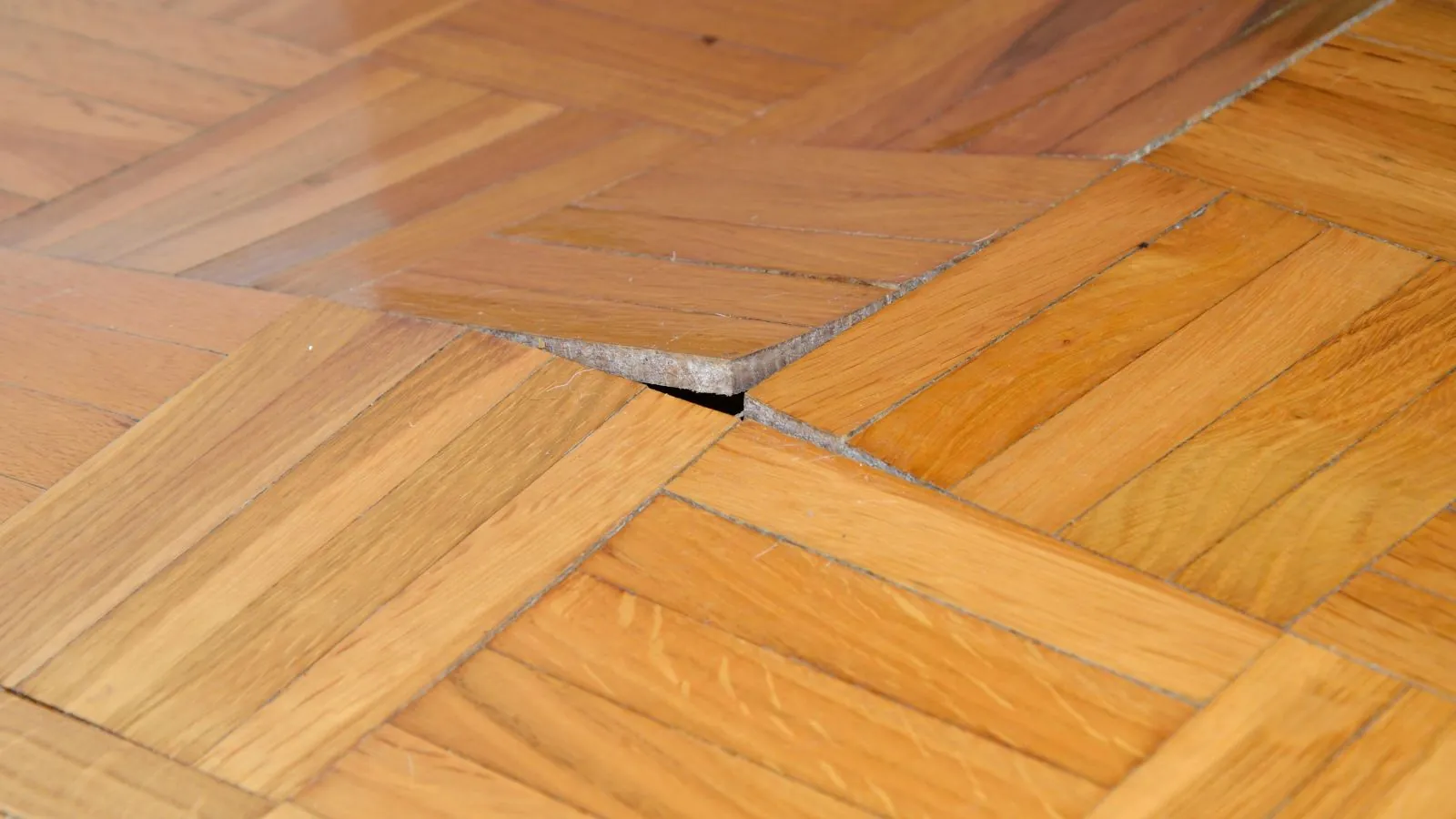
Hardwood floor water damage in Chelsea shows up as cupping, crowning, gaps, staining and eventually buckling. Wood takes in moisture along the edges and underside, and it dries slowly, so the first 48 hours matter. Call (659) 250-1979 if boards are lifting or the floor feels damp. Remove rugs and furniture so air can reach the surface.
This page is about wood floors specifically. Related pages are kitchen water damage and structural drying. If the damage started below the floor, crawl space water damage is the likely cause.
What water does to wood floors
Wood is hygroscopic, which means it absorbs and releases moisture with the air. When water reaches it, boards swell across their width. If the bottom takes up more moisture than the top, boards cup, with raised edges. If the top is wetter, boards crown. If swelling is bigger than the room allows, boards lift and buckle.
| What you see | What it means | Outlook |
|---|---|---|
| Cupped edges | More moisture below than above | Often flattens after slow drying, then sanding |
| Crowned center | More moisture above, or sanded while wet | Wait until fully dry before sanding |
| Buckled boards | Severe swelling pushed boards off the subfloor | Often needs replacement |
| Dark stains or black spots | Long-term moisture or mold | Board replacement and mold check |
How hardwood is dried
- Remove the water. Standing water is extracted, and rugs and mats are lifted.
- Measure. Moisture meters check boards and subfloor. Meter readings matter more than appearance.
- Dry slowly. Air movers and dehumidifiers pull moisture out, sometimes with drying mats or panels that pull moisture through the boards.
- Wait. Wood needs to return to a stable moisture level before any sanding.
- Repair. Sand and refinish if boards flatten, or replace boards that do not.
Drying too fast can split boards, which is why monitoring daily is part of the work.
When to replace rather than repair
Boards that stayed wet for days, have black staining or have lost their shape usually do not recover. Engineered flooring has a thin wear layer over plywood, so water that gets underneath can delaminate the layers. Floors over a wet crawl space or slab need the moisture source fixed first or any new floor will fail.
What to do in the first two days
Remove standing water, lift rugs and furniture and run the air conditioner to lower humidity. Do not cover the floor with plastic or towels for long, because that traps moisture. Do not sand, stain or seal a floor that has been wet until readings show it has returned to a stable level.
Photograph cupping and gaps while they are fresh. Boards often look worst a few days after the water, as moisture works through the wood, so keep photographing over time. This record also helps later if some boards need replacement.
Boards lifting or cupping? Act before they buckle.
☎ Call (659) 250-1979Floors over a slab or a crawl space
The foundation under a floor changes both the cause and the cure. Boards over a crawl space can be wetted from below by humidity or leaks, and boards over a slab can wick moisture up through it. Fixing the floor without fixing the moisture path leads to cupping again within a season.
ANSI/IICRC S500 describes wood flooring as a slow-drying material, which is why drying plans for it run longer than for tile.
Safety: Slick floors
Wet wood is slippery, and cupped boards catch toes. Keep children away, and avoid sanding or heating a wet floor.
What shapes the cost of wood floor repair
- Wood type. Solid, engineered and pre-finished boards respond differently.
- Area wet. A section differs from a full room.
- Drying time. Slow, controlled drying needs more equipment days.
- Refinishing. Sanding and finishing is separate from drying.
- Matching. Replacing boards in an older floor requires matching species and stain.
Insurance often covers sudden water damage to floors, and often does not cover long-term seepage. Photograph the boards before anything is moved and keep receipts. For a realistic number on your own floor, call (659) 250-1979.
Frequently asked questions
Often, if the moisture source is fixed and the floor dries slowly. Sanding is only done after readings are stable.
Wait until moisture readings have returned to normal, which can take weeks for thick or heavily soaked boards.
Not necessarily. Water under the wear layer can separate the plies.
Strong heat can split boards. Controlled drying with dehumidifiers is safer.
Moisture can be trapped under the boards or in the subfloor. A meter reading helps find out.
Sudden water damage often is. Check your policy and ask your insurer.
Water still on the move? Dispatch is open around the clock.
☎ Call (659) 250-1979