
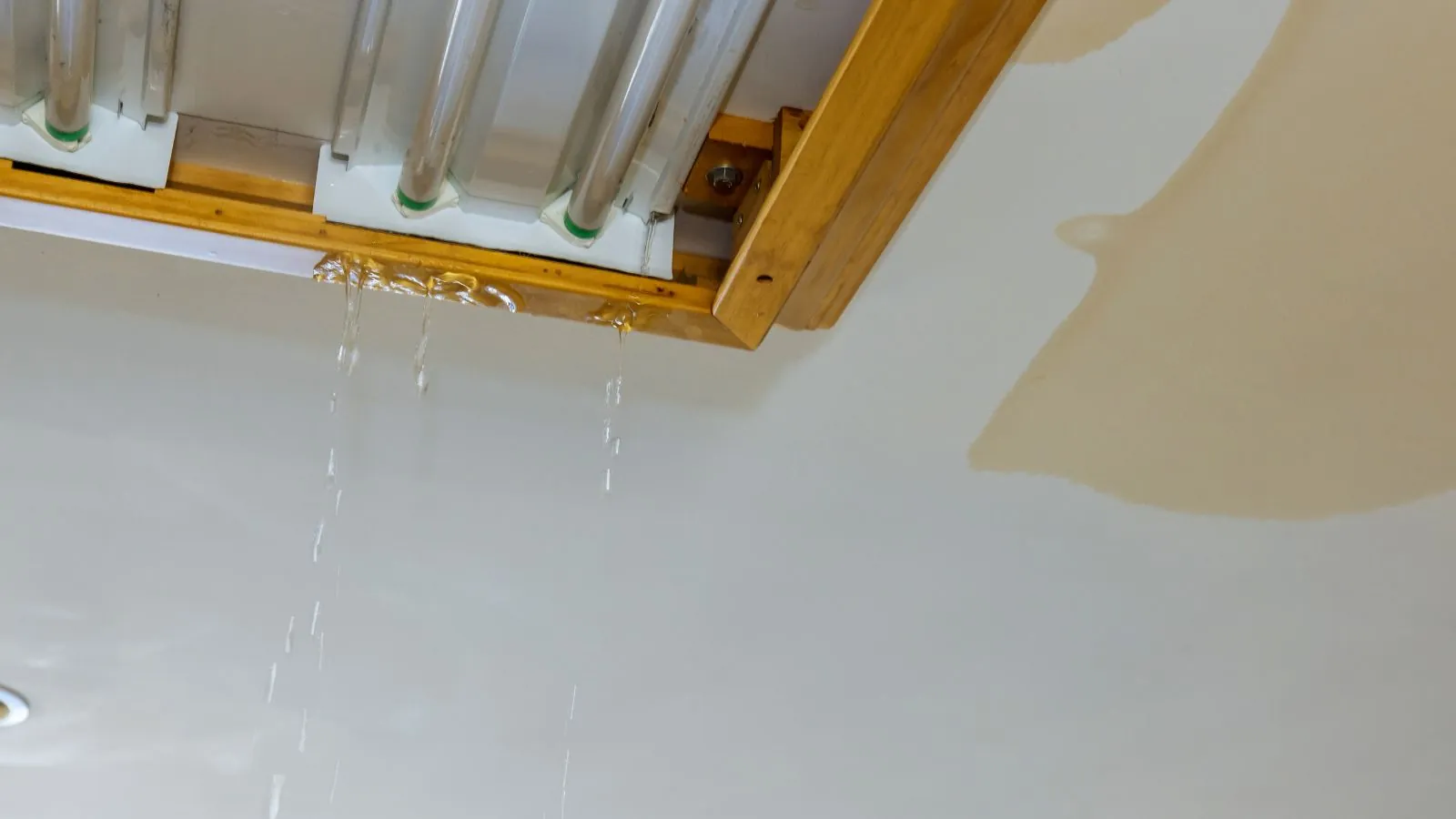
Emergency ceiling water damage in Chelsea can turn from a brown stain to a collapse in a matter of hours if water keeps pooling above the drywall. If the ceiling is sagging or dripping, keep people out from underneath, place a bucket if it is safe and call (659) 250-1979. Dispatch answers 24/7. Never poke a bulging ceiling from below, because it can release a large volume at once.
This page owns the ceiling and what sits above it, whatever the source: a roof leak through the decking, an upstairs bath, a supply line or an attic duct. Water in the wall below belongs to wall and drywall repair, and the roof itself needs a roofer.
When a ceiling leak is an emergency
A ceiling holds water the way a hammock holds weight. Drywall soaks up the water and sags, insulation above it adds more weight, and the water has nowhere to go until the ceiling fails. A bulge, a sag or water beading on the surface means the ceiling is already carrying more than it should.
Safety: Bulging or dripping ceiling
Move people and pets out of the room. If the water passes light fixtures or a ceiling fan, leave the circuit off at a dry panel, and call the utility or 911 for any electrical risk before the restoration line. Do not stand beneath the bulge, and do not puncture it unless a professional tells you to.
Finding what is above the ceiling
Before anything is repaired, someone has to find the source. Crews use moisture meters and thermal imaging to trace the wet area upward, and check the attic and upstairs bathrooms. A stain that grows after rain points to the roof. A stain that grows after a shower points to a tub or toilet. A stain that does not change with weather or use points to a supply line or an HVAC drain.
| Pattern you see | Likely source | Who fixes the source |
|---|---|---|
| Stain grows only after rain | Roof leak, flashing or vent boot | Roofer |
| Stain below an upstairs bathroom | Tub, toilet or supply line | Plumber |
| Stain appears on warm, humid days | AC condensate line or drain pan | HVAC technician |
| Stain with a constant slow drip | Pressurized line in the attic or ceiling | Plumber |
Roof leaks that reach the ceiling
A roof leak rarely appears directly under the hole. Water enters at flashing, a vent boot or a missing shingle, runs along the decking and rafters and drops where the insulation lets it. That can leave a stain several feet from the real entry point, which is why a ceiling stain is a poor guide to where the roof is damaged.
Restoration handles the wet insulation, the soaked drywall and the drying. A roofer repairs the shingles or flashing. A temporary tarp is often placed first, especially after a storm, and storm water damage explains how those events are handled. Wet attic insulation is a particular problem because it stays wet for weeks if it is left in place.
Ceiling sagging or dripping? Keep clear and call now.
☎ Call (659) 250-1979How a ceiling is repaired
- Stop the source. Shut off water or tarp the roof so no new water arrives.
- Relieve and remove. A professional opens a safe drain point in a bulging ceiling, then removes wet or sagging drywall.
- Dry the cavity. Air movers and dehumidifiers dry rafters, joists and the room, with moisture readings to confirm.
- Replace insulation. Wet insulation is removed because it holds water and loses insulating value.
- Rebuild. New drywall is hung, taped, textured and painted to match.
Related damage often follows the water down, so ceiling jobs commonly connect to carpet restoration and structural drying.
ANSI/IICRC S500 is the reference for deciding whether wet ceiling insulation is dried or discarded, and it leans toward discarding when water crossed dirty attic material.
What shapes the price of ceiling repair
- Area and height. A small stain costs far less than a full room, and high or vaulted ceilings add labor.
- Insulation. Attic insulation that soaked must be removed and replaced.
- Source repair. The roof, plumbing or HVAC repair is a separate cost.
- Texture and paint. Matching texture and a full wall of paint adds finish work.
- Collateral damage. Floors and furniture below may need their own work.
Insurance often covers sudden roof or plumbing damage and often does not cover long-term seepage. The Alabama Department of Insurance advises documenting every loss with photos or video, so photograph the ceiling before anything is opened. Want your real number? Call (659) 250-1979.
Frequently asked questions
Yes. A sagging ceiling at midnight is still an emergency, so the line stays open through nights, weekends and holidays. Call (659) 250-1979 and describe the stain, the sag and whether water is dripping.
Not unless a professional tells you to. A controlled opening at the lowest point can relieve water safely, but doing it blind can release a large volume on you and on the room below.
Not safely before the source is found and the area is dry. Paint over damp drywall hides the problem, and stains usually bleed through anyway.
They are linked but different. The roof needs a roofer. Ceiling damage needs extraction, drying and drywall repair, which is the work covered on this page.
Rings with darker edges usually mean repeated wetting. A soft, damp or sagging area means active water. Moisture readings settle it better than appearance.
Sudden and accidental causes such as a storm opening or a failed pipe are often covered, while gradual leaks are often not. Check your policy and ask your insurer.
Water still on the move? Dispatch is open around the clock.
☎ Call (659) 250-1979