
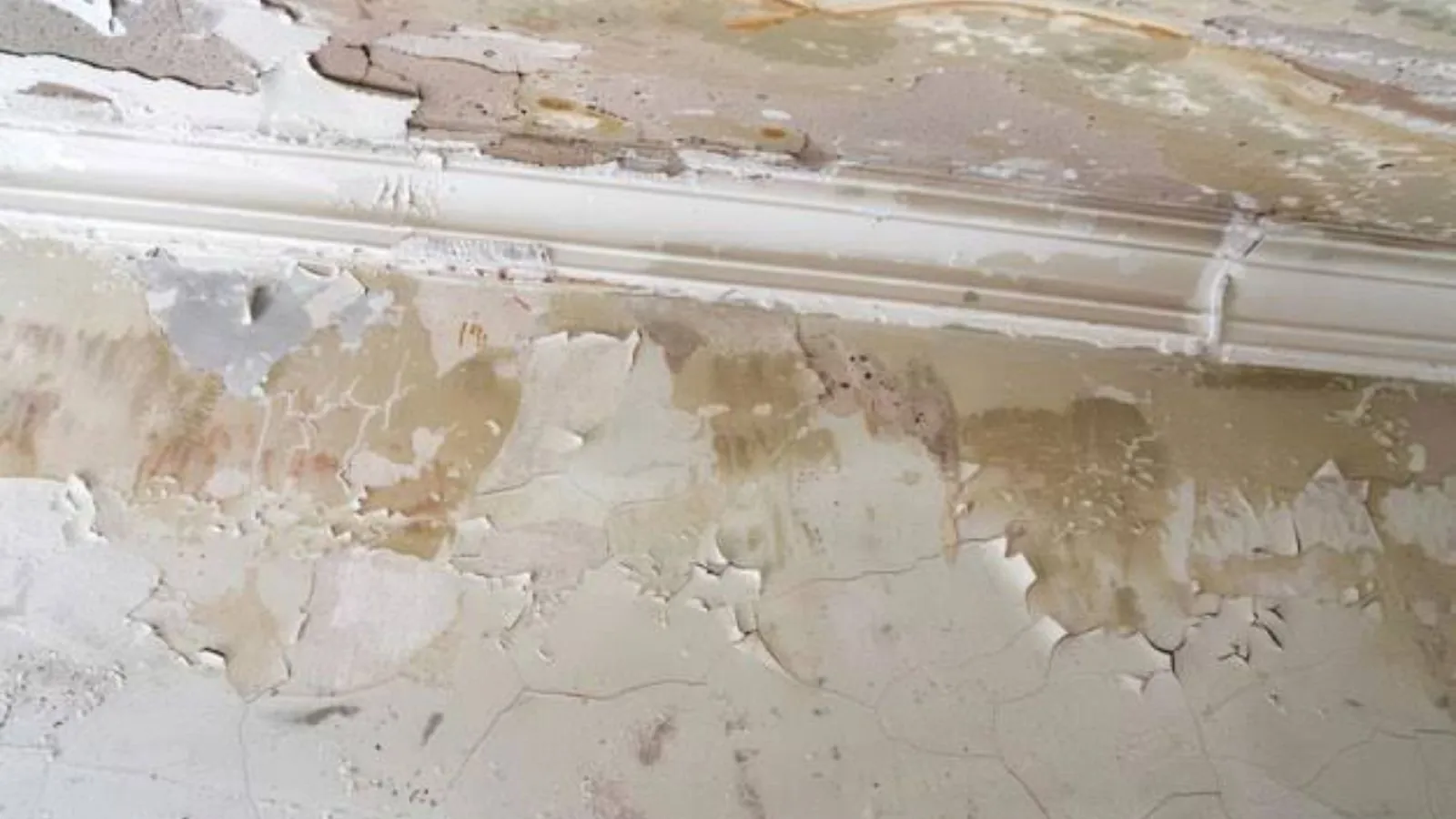
Wall and drywall water damage in Chelsea often shows as stains, bubbling paint, soft baseboards and a faint musty smell. Drywall is paper-faced gypsum that absorbs water readily, wicks it upward and holds it. Call (659) 250-1979 if a wall feels damp or looks stained. Do not paint over it, because wet drywall will bleed through.
Many wall problems begin as leaks elsewhere, so see burst pipe water damage and ceiling water damage. The drying process is explained under structural drying.
What wet drywall looks like
Fresh water damage can be subtle. Look for discoloration, bubbling or peeling paint, a swollen or soft baseboard, a horizontal tide line from wicking and fine cracks at seams. Pressing gently with a finger should not leave a dent. If it does, the gypsum has softened.
| Condition | Meaning | Usual response |
|---|---|---|
| Stain only, firm to the touch | Light wetting, now dry or drying | Moisture check, then prime and paint |
| Damp or cool surface | Water still in the wall | Dry in place or open a small section |
| Soft, crumbly or sagging | Gypsum has failed | Cut out and replace |
| Black or green spots | Mold growth | See mold remediation |
Dry in place or cut out?
Clean-water wetting caught early can often be dried in place with dehumidifiers and small openings that let air move into the wall cavity. Water that was dirty, stood for days or left drywall soft is cut out. A flood cut removes the bottom portion of the wall, typically 12 to 24 inches above the highest wet reading.
Insulation inside the wall cavity is checked too. Wet batts hold water against the back of the drywall and are removed.
How wall repair is done
- Find the extent. Moisture meters and thermal imaging map the wet area.
- Open and dry. Sections are cut, cavities opened and air movers set.
- Verify. Readings confirm framing and remaining drywall are dry.
- Replace. New drywall is hung, taped, mudded and sanded.
- Finish. Primer, texture and paint match the room.
Why not just paint over it
Paint and primer seal the surface, not the moisture behind it. A damp wall under paint is a good place for mold to start, and stains often reappear within weeks. The EPA says mold will not grow without moisture, so drying has to come first.
Wall stained or soft? Find out how far the water went.
☎ Call (659) 250-1979Checking a wall yourself
Press the wall at several heights with your palm. Cool spots, soft spots and a dull sound when you tap can all indicate moisture. Look behind furniture and inside closets, where stains often hide. A flashlight held at an angle shows bubbling and seams that a direct view hides.
Mark the edge of any stain in pencil with the date. If the mark moves outward over days, water is still active behind it and the source needs attention before any repair.
ANSI/IICRC S500 is the source for the rule that drywall wet by contaminated water is removed rather than dried.
Safety: Opening a wall
Do not cut into a wet wall that may contain wiring or pipes. Wet drywall is heavy and can fall, so stay out from beneath sagging sections.
What shapes the cost of wall repair
When walls are part of a bigger loss
Walls rarely fail alone. A stained wall often sits beside a wet floor, a soft ceiling or a damp cabinet base, and the same leak feeds all of them. Ask for a full moisture map instead of a single patch, so the drying plan covers every connected surface. Dry walls with wet floors beside them tend to get wet again.
- Area and height. More wet wall means more cutting and replacement.
- Insulation. Wet insulation is removed and replaced.
- Baseboard and trim. Swollen trim is replaced and repainted.
- Finish matching. Texture and paint across a full wall adds finish work.
- Source repair. Plumbing or roofing repair is separate.
Coverage often applies for sudden water, and less often for long-term seepage. Photograph the wall before it is opened. For a realistic number, call (659) 250-1979.
Frequently asked questions
Sometimes. Clean-water wetting caught early often dries in place. Softened or dirty-water drywall is usually replaced.
Wicking can carry water several inches above the visible line. A moisture meter finds the true height.
Water has likely reached the wall base. Baseboard is often the first visible sign.
Not safely. Stains bleed through and damp walls can grow mold.
If it is wet, yes. It holds water against the drywall.
Drying takes days. Hanging, finishing and painting follow once readings are normal.
Water still on the move? Dispatch is open around the clock.
☎ Call (659) 250-1979