
Structural drying in Chelsea picks up where water extraction stops. Pumps remove standing water, but the water that soaked into drywall, framing, subfloor and insulation stays behind. Call (659) 250-1979 if you still have damp walls, a musty smell or floors that feel cool and soft after a leak.
Drying is a process, not a single machine. This page explains how air movers, dehumidifiers and moisture readings work together. For the first stage, see water extraction. For what happens when drying is delayed, see mold remediation.
Wet walls, musty smell or floors that stay damp?
These are the signs that a building has not dried. Walls feel cool or slightly soft, baseboards stay stained, paint bubbles, floors cup or buckle and a musty smell lingers days after the water is gone. Windows that fog on the inside also point to high humidity.
| Symptom | What it suggests | What drying does |
|---|---|---|
| Musty smell with no visible water | Moisture in walls or subfloor | Locates and dries the wet materials |
| Cool, soft drywall | Wet gypsum or paper | Dries in place or removes if it will not recover |
| Cupped or buckled flooring | Moisture below the boards | Dries the subfloor and floor together |
| Fogged windows | High indoor humidity | Dehumidifiers bring humidity down |
How structural drying works
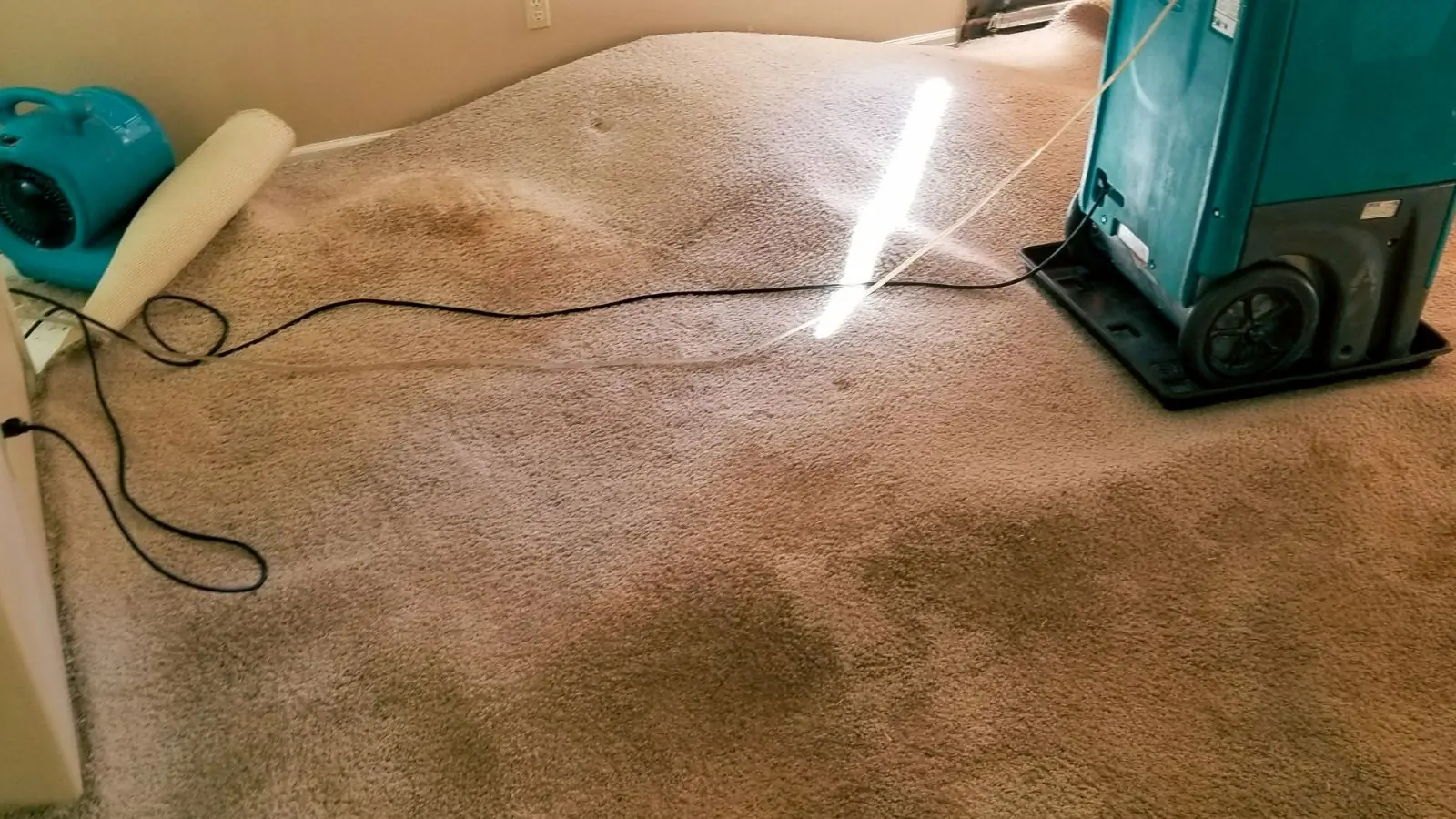
Drying balances three things: air movement, temperature and humidity. Air movers push dry air across wet surfaces to evaporate moisture. Dehumidifiers pull that moisture back out of the air so it does not settle elsewhere. Without dehumidifiers, the water just moves around the building.
- Map the moisture. Moisture meters and thermal imaging cameras locate wet materials, including those hidden behind walls.
- Set up equipment. Air movers and dehumidifiers are placed to move air through wet areas.
- Open cavities when needed. Small openings let air into wall bases and cabinet toe-kicks.
- Monitor daily. Readings track progress against dry reference materials.
- Remove equipment. Equipment comes out when readings show the materials are dry, not when a number of days passes.
How long drying takes in Alabama
Humidity matters. Alabama summers raise outdoor humidity, which is why dehumidifiers work in a closed system rather than relying on open windows. Several days is common for a moderate loss, and thick or heavily soaked materials such as hardwood, plaster or subfloor can take longer.
The EPA advises drying water-damaged areas within 24 to 48 hours to prevent mold. When materials stay wet beyond that, growth becomes a real risk, which is why drying starts as early as possible.
Walls still damp? Get a moisture reading before mold starts.
☎ Call (659) 250-1979What can and cannot be dried in place
Framing, concrete and many hard flooring materials dry well. Drywall often does if it was clean-water wet and caught early. Carpet pad, wet insulation and contaminated materials usually do not. For wood floors, see hardwood floor damage, and for carpet see carpet water damage.
ANSI/IICRC S500 sets out the drying goal as a dry standard, a reading taken from unaffected material of the same type.
Safety: Around drying equipment
Keep cords out of standing water and keep children and pets away from air movers. Do not block dehumidifier drains.
What shapes the cost of structural drying
- Area and materials. More wet square footage and thicker materials need more equipment.
- Equipment days. Heavier losses need more days of drying.
- Access. Closed cavities and finished surfaces require openings.
- Humidity. A humid day or season extends drying.
- Monitoring. Daily readings and follow-ups add time but confirm dryness.
Insurers often ask for drying logs and moisture readings, and the equipment record helps support a claim. Keep everything you receive. For a realistic number on your own project, call (659) 250-1979.
Homeowners in Highlands of Chelsea can also read about water damage restoration in Highlands of Chelsea, Chelsea.
Frequently asked questions
Look for cool or soft drywall, staining, bubbling paint, a musty smell and warped baseboards. A moisture meter gives a number.
Open windows in humid weather can add moisture. Fans alone move wet air around. Dehumidifiers remove the moisture from the building.
Several days is common for moderate losses. Readings decide when equipment can come out.
Air movers and dehumidifiers produce steady noise. Many homeowners choose to stay elsewhere for the first nights.
Fast, complete drying is the best prevention. The EPA says that mold will not grow without moisture.
Often yes. Hidden moisture in a wall base can persist even when the surface looks fine.
Water still on the move? Dispatch is open around the clock.
☎ Call (659) 250-1979