
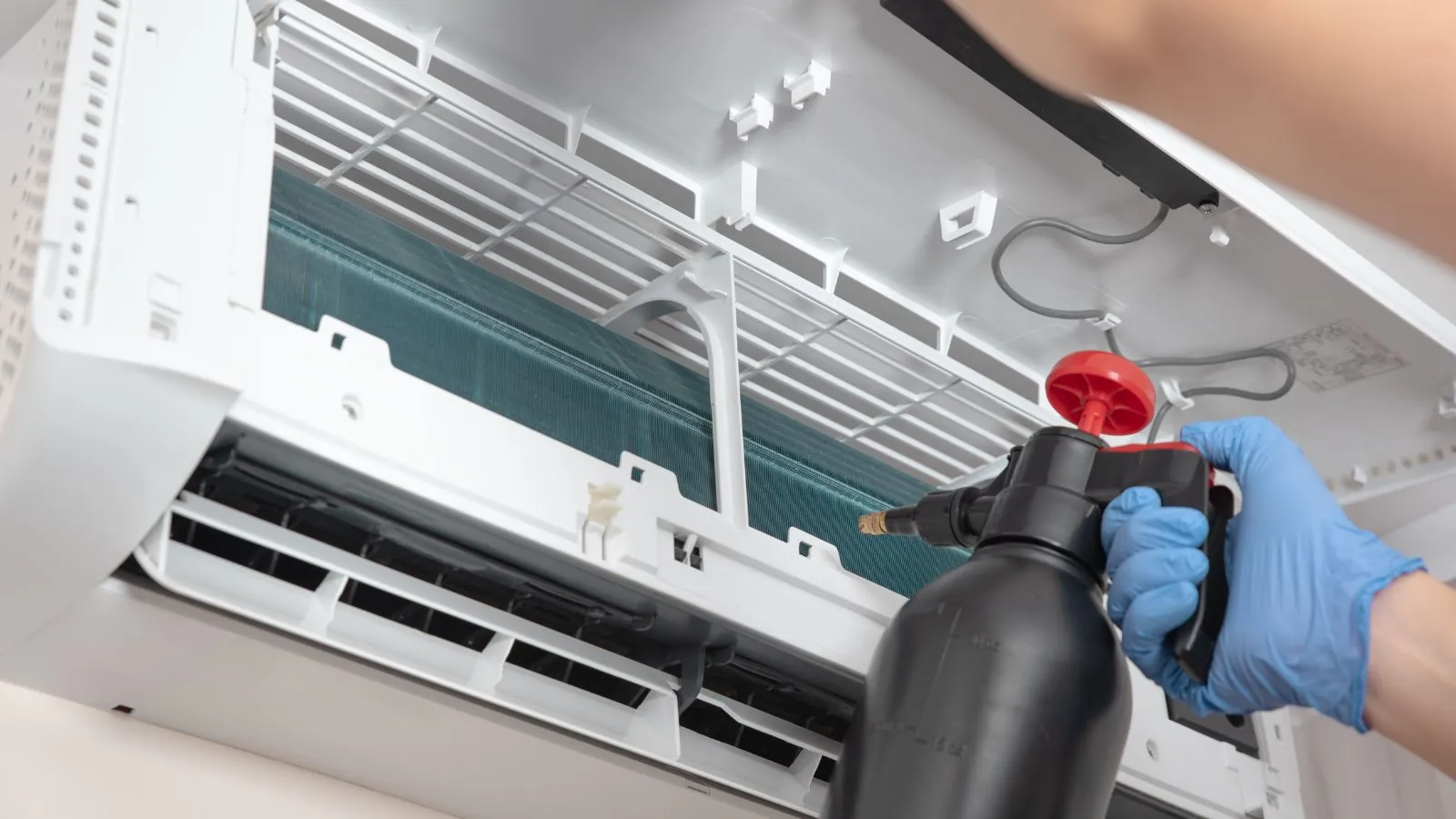
AC leak water damage in Chelsea tends to show up in July and August, when a system runs nearly nonstop in Alabama humidity. The air handler pulls moisture from the air and sends it to a drain line, and when that line clogs the water backs up into a pan, then over its edge. Call (659) 250-1979 if you see stains or drips, and turn the system off until a technician checks it.
This page is about HVAC condensate, not a pipe or a tank. If the ceiling below is already stained or sagging, see ceiling water damage repair. For general drying, structural drying explains the equipment.
How an AC unit ends up leaking
A working air conditioner can produce several gallons of condensate on a humid day. The water runs through a primary drain line to a drain, and a secondary line or float switch is meant to catch overflows. Algae and sludge clog the primary line, the pan fills, and the water goes wherever gravity takes it.
| Symptom | Likely cause | Who to call |
|---|---|---|
| Water at the air handler | Clogged drain line or cracked pan | HVAC technician for the unit, restoration for water |
| Ceiling stain under the attic unit | Overflowed pan above | Both trades |
| Ice on the coil or lines | Low airflow or refrigerant issue | HVAC technician |
| Musty smell near vents | Persistent moisture in ducts or pan | HVAC technician, then mold check if needed |
Attic and closet air handlers
Many homes have the air handler in the attic or a closet. An attic unit that overflows soaks insulation and then drywall below, often unseen for days. A stain on a hallway ceiling beside the attic hatch is a classic sign.
The EPA says that keeping indoor humidity below 60 percent, and ideally between 30 and 50 percent, helps prevent mold, and that air conditioner drain lines should be kept clear. A leaking unit works against both, which is why a small drip deserves attention before a large one appears.
How AC leak damage is repaired
- Turn the system off. Stopping the unit stops new condensate while the line is cleared.
- Clear and repair. An HVAC technician clears the drain line and replaces a cracked pan or failed float switch.
- Remove wet materials. Soaked insulation is removed, and soft drywall is cut out when it will not dry.
- Dry the cavity. Air movers and dehumidifiers dry framing and the room below.
- Check for growth. If a musty odor persists, mold remediation covers testing and cleanup.
Why this is usually not an emergency
Condensate is clean water, it leaks slowly and it is simple to stop by turning the unit off. That is why this page is not an emergency page. Wet insulation and drywall still need attention soon, because a damp attic is exactly where mold takes hold.
Condensate from a cooling coil starts as clean water, which ANSI/IICRC S500 files under Category 1, but it picks up slime and dust as it sits in a pan.
Safety: Turn the system off first
Switch the thermostat to off before you touch a wet air handler, and keep your hands away from wet wiring or the condensate pump.
Stains under the air handler? Dry it before mold starts.
☎ Call (659) 250-1979What shapes the cost of AC leak repair
- How long it leaked. Weeks of slow overflow soak more material than one bad afternoon.
- Where the unit sits. Attic installations add access difficulty.
- Insulation. Wet attic insulation is removed and replaced.
- Ceiling drywall. Stained or sagging drywall is cut out and finished.
- HVAC repair. The drain line, pan or switch is billed by the HVAC trade, not restoration.
Coverage for HVAC overflow depends on your policy and on whether the cause was sudden or gradual. Photograph the damage and keep receipts. For a realistic number on your own leak, call (659) 250-1979.
Preventing the next overflow
Have the drain line cleared before summer, add a float switch that shuts the system off when the pan fills and check the pan whenever you change the filter. A cup of diluted vinegar poured down the line can slow algae growth, though the manufacturer's maintenance guidance should come first.
Frequently asked questions
The most common cause is a clogged condensate drain line. Others include a cracked drain pan, a frozen coil that melts or a failed float switch.
It is better not to. Turn the system off until a technician clears the line, because running it adds more water to the damage.
Condensate starts clean but can carry algae and dust. Water that soaks insulation and sits can still grow mold.
Sometimes. Sudden overflow may be covered, while gradual leaks often are not. Read your policy and ask your insurer.
An HVAC technician fixes the unit. Restoration crews dry the structure and remove wet materials.
Clean the drain line every year, install a float switch and check the pan at each filter change.
Water still on the move? Dispatch is open around the clock.
☎ Call (659) 250-1979