
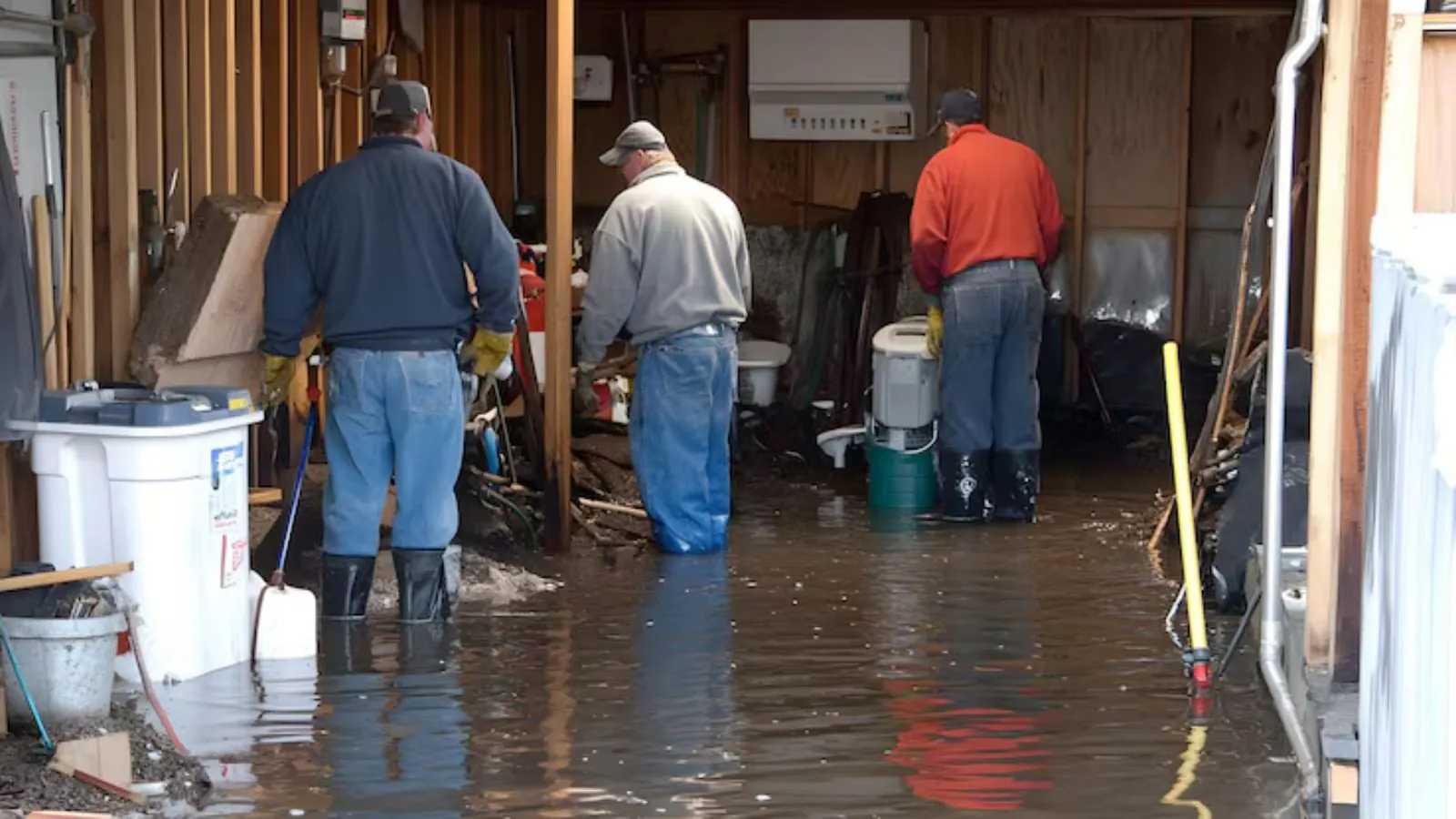
Emergency water extraction in Chelsea begins with a simple fact: every hour that water stands inside a building, it travels further into drywall, subfloor and insulation. Dispatch is open 24/7, so call (659) 250-1979 first. While you wait, stop the source if it is safe, stay out of any room where water touches outlets, and lift valuables onto dry surfaces.
This page covers standing water, the kind that pools on a floor and needs pumps. If the water is gone and the walls still feel damp, the next step is structural drying. If the water came up a drain, go straight to sewage backup cleanup because contaminated water follows different safety rules.
When standing water is an emergency
A puddle by the dishwasher can wait for a towel. Water that covers a floor cannot. The weight alone is a warning: one inch of water across 1,000 square feet is about 623 gallons, and water weighs roughly 8.3 pounds per gallon, so that single inch puts more than 5,000 pounds on a floor system.
| What you see | What it usually means | First move |
|---|---|---|
| Water across most of a room | A supply line, appliance or storm entry has released a large volume | Shut off the source, then call dispatch |
| Water reaching outlets or baseboard heaters | Electrical risk on top of water damage | Stay out, cut power only from a dry panel, call 24/7 |
| Cloudy, dark or smelly water | Category 2 or 3 water, not safe to touch | Keep people and pets out, call dispatch |
| A thin film that returns after mopping | Water is still entering from a hidden source | Find the source before extracting |
How emergency water extraction works
Extraction removes bulk water before drying equipment can do its job. Crews choose the tool by depth and surface. Submersible pumps clear water that is several inches deep. Truck-mounted or portable extraction units pull water out of carpet and pad. Weighted extractors press water from carpet on the floor, and wet vacuums finish edges and corners.
Technicians check where the water went, not just where it is standing. Moisture meters and thermal imaging cameras show wet wall bases, wet subfloor and wet insulation that look dry from above. That map decides what happens next, which is why extraction and drying are planned together.
What comes out and what can stay
Removing standing water quickly is what makes saving materials possible. Hardwood and tile can often stay when water is cleared fast. Carpet may be saved while the pad underneath is removed, because pad holds water like a sponge and dries slowly. Wet drywall at the baseboard may be cut out when it stays soft after extraction.
Contents matter too. Rugs, books and cardboard boxes are the first things to wick up water. Moving them early, before the crew arrives, protects them and gives extraction units clear floor to work.
Safety: Water and electricity: stay out first
If water touches outlets, extension cords, appliances or the electrical panel, do not walk through it. Cut power at the main breaker only if you can reach the panel while standing on dry ground. If you cannot, call the utility or 911 before you call the restoration line.
Never use a household vacuum on standing water, and never run a pump from an extension cord that sits in water.
Water still standing? Pumps start with a phone call.
☎ Call (659) 250-1979Chelsea homes and where the water collects
Parts of Chelsea sit on or beneath the ridge of Double Oak Mountain, and runoff follows slope. In a house on a sloped lot, standing water tends to collect on the low side first, often in a garage, a walkout lower level or a finished room built against the hill. Tell dispatch which side of the house is wet, because it changes where pumps are staged.
For directions, give the nearest cross street on US 280 or a county road. After-hours calls to dispatch are normal here, and no arrival time is promised.
ANSI/IICRC S500 ranks bulk water removal as the first step of any plan, ahead of drying equipment.
What shapes the price of extraction
- Water category. Clean water from a supply line is quicker and cheaper to remove than Category 2 or 3 water, which adds protective gear and disposal.
- Depth and area. More gallons and more square feet mean longer pump and extractor time.
- Materials affected. Carpet pad and drywall removal add labor, while sealed tile adds almost none.
- Access. A finished basement or tight crawl route slows setup.
- What follows. Extraction is the first stage, so drying days and rebuild scope are priced separately.
Insurance often responds differently to sudden and accidental water than to flooding. The Alabama Department of Insurance says standard homeowners policies generally do not cover flooding, so check your policy or ask your insurer before you assume either way. Photograph the water before it is removed. Want your real number? Call (659) 250-1979.
Homeowners in Chesser Plantation can also read about water damage restoration in Chesser Plantation, Chelsea.
Frequently asked questions
Yes, pumps and extractors are part of the round-the-clock service. Call (659) 250-1979, say where the water is standing and whether it reaches outlets. No arrival time is promised.
A shop vacuum rated for wet use can handle a small spill, but standing water across a room needs pumps and extractors. Never use a vacuum near water that touches outlets, and never use a household vacuum on water at all.
Call whenever water covers a floor or soaks carpet, even if it is only a fraction of an inch deep. Shallow water spreads under baseboards and into subfloor quickly, and the cost of delay is usually larger than the cost of a call.
Extraction removes bulk water but leaves moisture inside materials. Air movers and dehumidifiers finish the job, and moisture meter readings confirm dryness. See structural drying for the second stage.
Not if you cannot rule out electricity or contamination. Clear water from a failed supply line is still an electrical risk if it touches outlets, and anything cloudy, dark or smelly should be treated as unsafe.
It depends on the cause. Sudden and accidental water is often covered, while flooding is generally excluded from standard policies. Check your policy, document everything and ask your insurer, because the coverage decision is theirs.
Water still on the move? Dispatch is open around the clock.
☎ Call (659) 250-1979