
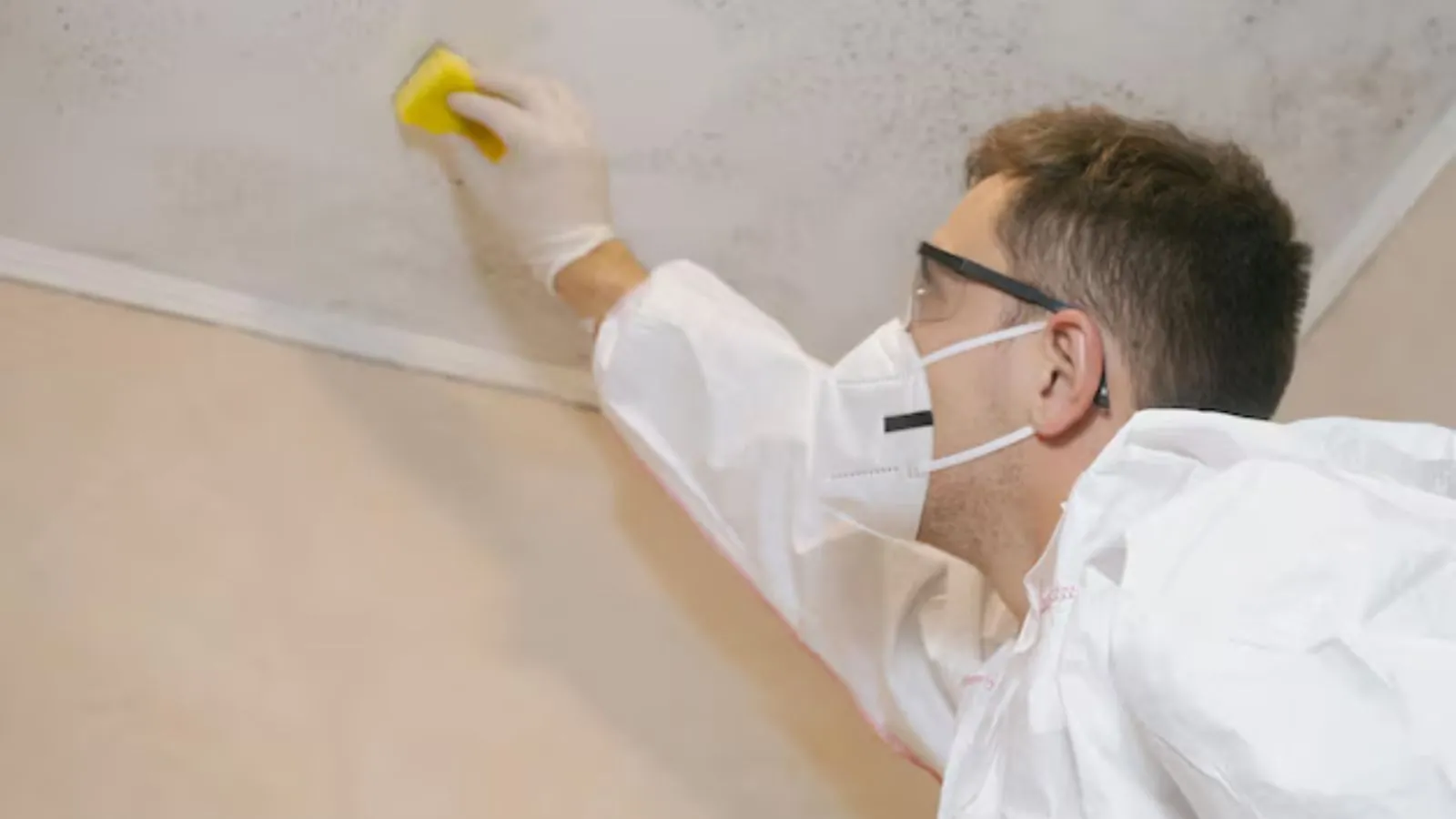
Mold remediation in Chelsea begins with moisture, not with spray. The EPA says that none of the many types of mold will grow without it, so removing the water source is what prevents regrowth. Call (659) 250-1979 if you see spots, smell mustiness or know of a past leak. Keep the area closed and avoid disturbing growth.
Mold usually follows water damage, so related pages include structural drying, wall and drywall repair and crawl space water damage.
Musty smell, dark spots or a room that stays damp?
Mold announces itself in a few ways. A musty odor with no visible source, black, green or white spots on walls and ceilings, peeling paint, warped materials and a history of leaks all raise suspicion. A damp, humid room that never quite dries is the setting mold prefers.
| Sign | Where it usually starts | Next step |
|---|---|---|
| Spots on a bathroom ceiling | Poor ventilation, steam | Improve ventilation, clean small areas |
| Musty smell in a closet or wall | Hidden leak or humidity | Moisture reading to find the source |
| Fuzzy growth on drywall near a leak | Wet drywall that never dried | Containment and removal |
| Growth on attic sheathing | Roof leak or poor ventilation | Fix the cause, then remediate |
What the EPA says about size
The EPA says that mold covering less than about 10 square feet can usually be handled by the homeowner, using detergent and water and protective gear. Larger areas, repeated growth, contaminated water or health concerns call for a professional. Porous materials such as ceiling tiles and carpet may have to be thrown away if they are moldy.
The EPA also advises keeping indoor humidity below 60 percent, ideally between 30 and 50 percent, and drying water-damaged areas within 24 to 48 hours.
How professional remediation works
- Find and stop the moisture. Moisture meters and thermal imaging locate the source, and the leak is repaired.
- Contain. Plastic barriers and negative air keep spores from spreading.
- Remove. Moldy porous materials are removed and bagged, and framing is cleaned.
- Clean and dry. HEPA vacuums and damp wiping clean surfaces, then drying finishes the area.
- Verify. Readings and a visual check confirm the area is dry and clean.
- Rebuild. Drywall, insulation and finishes are replaced.
Bleach is not a fix for porous materials. It does not reach roots inside drywall or wood, and it adds moisture. Removal is the dependable approach.
Why mold comes back
Mold returns when the cause remains. A pipe that still seeps, an attic with poor airflow, a bathroom without an exhaust fan and a crawl space without a vapor barrier all keep the cycle going. A repair that skips the source is a short-term fix.
Musty smell or spots? Find the moisture first.
☎ Call (659) 250-1979Protecting yourself while you wait
Keep the affected room closed, turn off fans that would blow spores around and avoid sweeping or dusting the area. If you must clean a small spot, wear an N95 respirator, gloves and eye protection. People with asthma, allergies or weakened immune systems should stay away from the area and talk to a doctor if symptoms appear.
Reduce humidity with a dehumidifier in closed spaces and fix any obvious drip. These steps do not replace remediation, but they keep conditions from getting worse until a plan is in place.
Mold work follows a companion standard, ANSI/IICRC S520, which assumes that the moisture source has been found and fixed first.
Safety: Mold and breathing
Wear an N95 respirator, gloves and eye protection if you must disturb growth, and keep people with asthma away from the room.
What shapes the cost of mold remediation
- Area affected. Square footage drives containment and labor.
- Material type. Porous materials are removed, hard surfaces are cleaned.
- Location. Attics and crawl spaces slow access.
- Source repair. Plumbing, roofing or ventilation repair is separate.
- Testing. Post-work verification or clearance testing adds steps.
Mold coverage varies widely, and many policies limit or exclude it unless it follows a covered water loss. Read your policy and ask your insurer. For a realistic number, call (659) 250-1979.
Frequently asked questions
Stop the moisture source, keep the area closed and avoid disturbing it. Small areas under about 10 square feet can often be cleaned with detergent and water.
Not on porous materials. Bleach does not penetrate drywall or wood and adds moisture. Removal is more dependable.
Home kits are limited. A visual check and moisture readings usually tell more than a spore count.
It can begin within 24 to 48 hours of water exposure, according to the EPA, if materials stay wet.
Often only when it follows a covered water loss. Read your policy and ask your insurer.
It can irritate eyes, nose, throat and lungs, particularly for sensitive people. Ask a doctor about health concerns.
Water still on the move? Dispatch is open around the clock.
☎ Call (659) 250-1979